Pucci: the Italian brand that transformed color into elegance

When we talk about Italian fashion, it's common to think of impeccable tailoring, classic cuts, and neutral palettes. However, Pucci occupies a unique space in this landscape: a brand that has made color, movement, and feminine freedom its greatest symbol of sophistication.
Founded in 1947 by Emilio Pucci, the brand was born almost by accident. An Italian aristocrat and ski practitioner, Pucci created a sports outfit for a friend. The piece, innovative for its time, caught the attention of Harper's Bazaar magazine, beginning a journey that would change the history of women's fashion.


Shortly after, Pucci opened his first store in Capri, one of the most elegant destinations in the Mediterranean. There, he consolidated an aesthetic that completely broke away from the rigidity of 1950s haute couture. His creations were light, fluid, colorful, and designed to move with the female body—a true silent revolution.
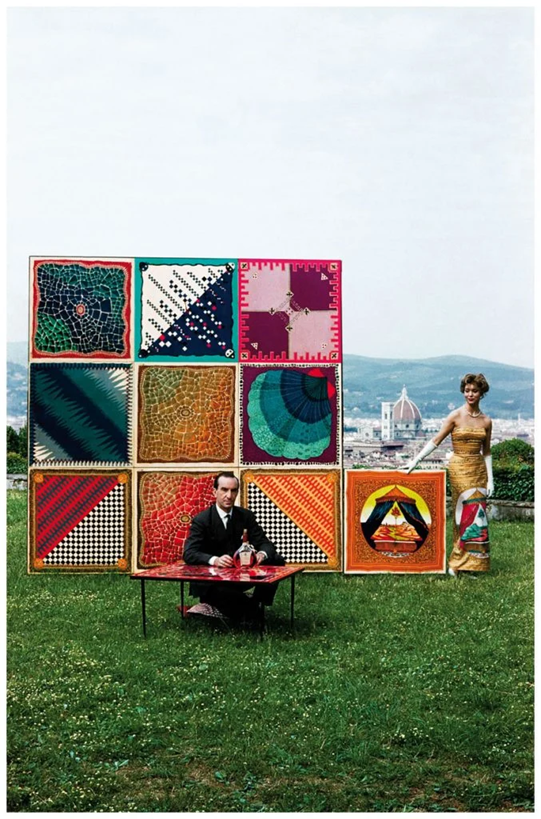
The brand's greatest distinguishing feature has always been its prints. Vibrant, geometric, and almost hypnotic, they draw inspiration from nature, Sicilian mosaics, and Renaissance art. These patterns have become so iconic that they have transformed Pucci into one of the most easily recognizable brands in the fashion world.

Another important milestone was the use of silk jersey, a luxurious, comfortable fabric with an impeccable drape. It allowed the pieces to be elegant without sacrificing practicality, reinforcing the idea that sophistication and freedom can — and should — go hand in hand.
During the 1960s and 1970s, Pucci experienced its heyday. It became a favorite brand of style icons such as Jackie Kennedy, Marilyn Monroe, Sophia Loren, and Grace Kelly. Its creations also transcended traditional clothing, appearing in scarves, eyewear, lingerie, and even iconic uniforms, such as those of Braniff Airways.


After Emilio Pucci's death in 1992, the brand underwent natural transformations, but without losing its essence. Today, belonging to the LVMH group, Pucci is experiencing a new phase under the creative direction of Camille Miceli, who seeks to balance the brand's vibrant legacy with a contemporary and digital language.
More than a fashion brand, Pucci represents a form of expression. A reminder that elegance lies not only in neutrality, but also in the courage to use color, art, and identity with authenticity.

Images:


Comments